Discover NZ
New Zealand,
for first-timers.
Where it is, when to go, and what to watch out for. Not an encyclopedia — just what you need before you leave.
Where?
About 10,000 km away,
only 3–5 hours' time difference.
You fly across the equator, almost due south, so jet lag is easy despite the distance. It’s a separate country from Australia, about three hours away by plane.
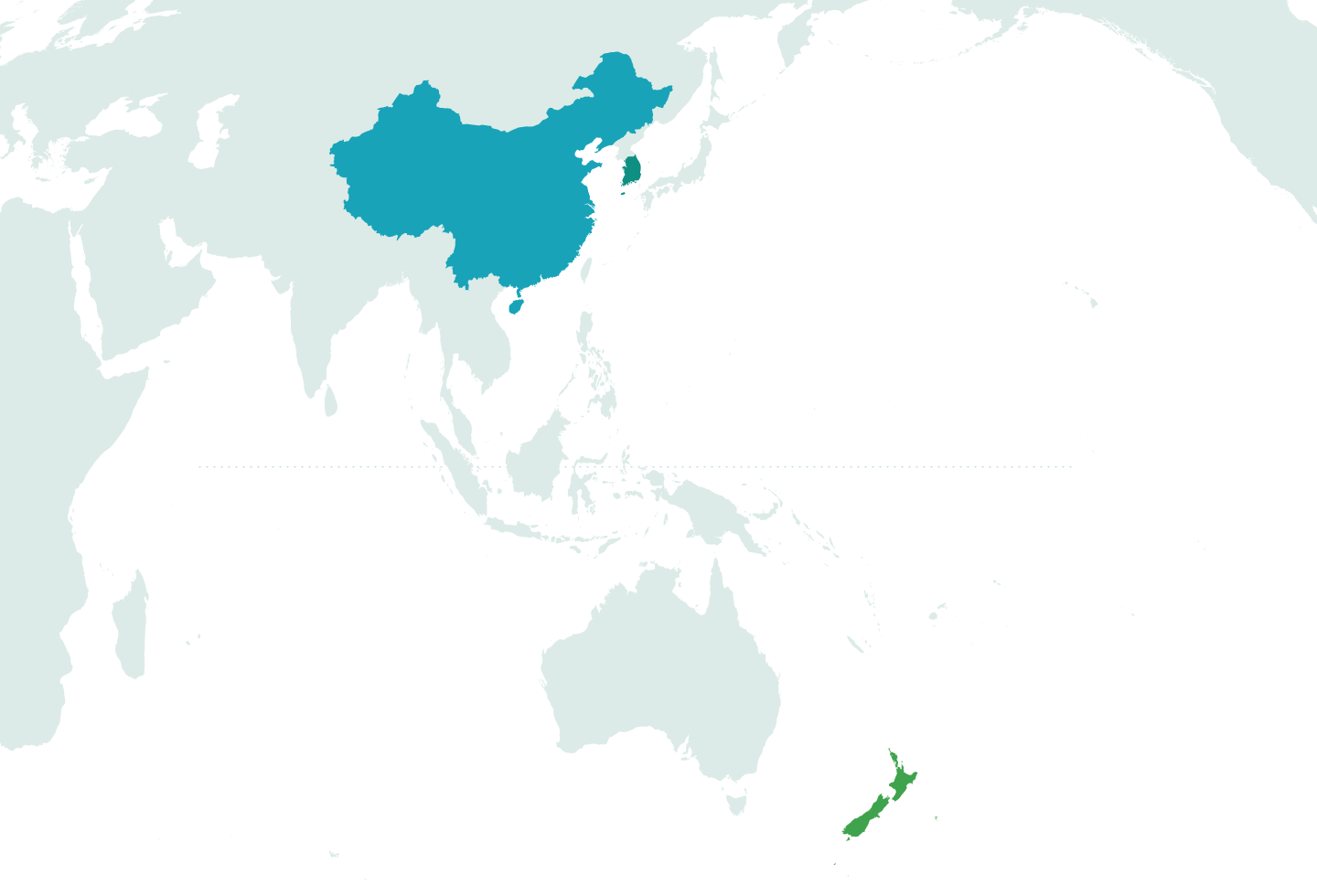
Incheon → Auckland
About 9,660 km
Korean Air direct, about 11 h 30 min
Shanghai · Guangzhou → Auckland
About 9,300 km
Beijing is about 10,430 km
Time difference (NZ is ahead)
Korea +3–4 · China +4–5
The larger figure applies during daylight saving (late Sep – early Apr)
Distance: shortest (great-circle) airport-to-airport · Map: Equal Earth projection, Natural Earth data
Two big islands.
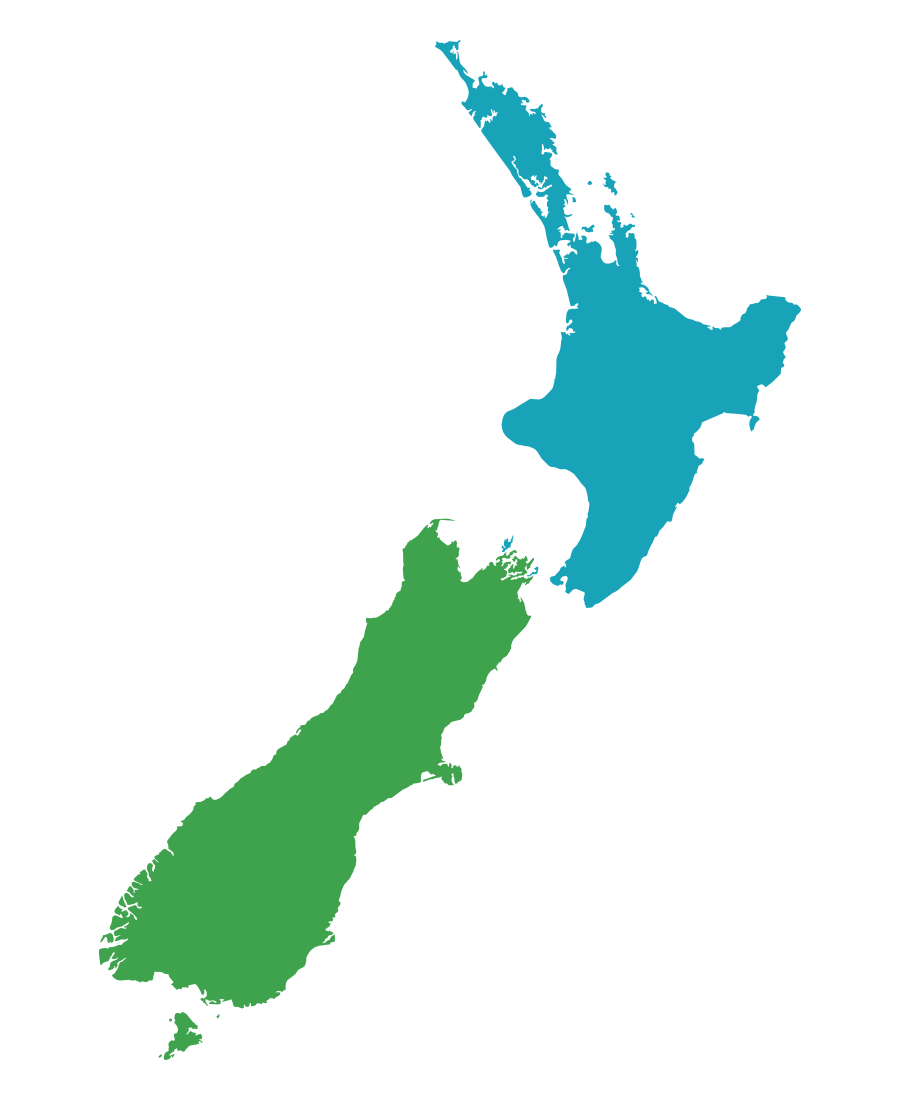
North Island · Te Ika-a-Māui
Volcanoes, hot springs, warm seas
Home to more than three-quarters of the population. Auckland and the capital Wellington are here, along with Rotorua’s geothermal areas, active volcanoes and Coromandel’s beaches. Fairly mild even in winter.
South Island · Te Waipounamu
Snowy peaks, lakes, glaciers and fiords
Bigger in area with far fewer people. The Southern Alps run along the island, topped by Aoraki/Mount Cook (3,724 m). Cooler than the North Island, and the weather changes fast.
Seasons are the opposite of Korea's.
People joke about ‘four seasons in one day’ — the weather changes that fast. Pack a light windbreaker even in summer; layering is the answer.
Spring · Sep–Nov
Lambs and blossoms
Lambs everywhere in the fields, and snow still on the South Island peaks. The most changeable weather of the year.
Summer · Dec–Feb
Beaches and long evenings
Light until 9 pm. The UV is very strong, so sunscreen and a hat are a must. It’s the local holiday season, so accommodation books up fast.
Autumn · Mar–May
Autumn colour and the grape harvest
Settled weather and fewer crowds. Arrowtown’s autumn colours and the grape harvest in the South Island.
Winter · Jun–Aug
Snowy peaks and hot pools
Snow and skiing in the South; rain is frequent in the North but it stays mild. South Island mountain roads sometimes need chains.
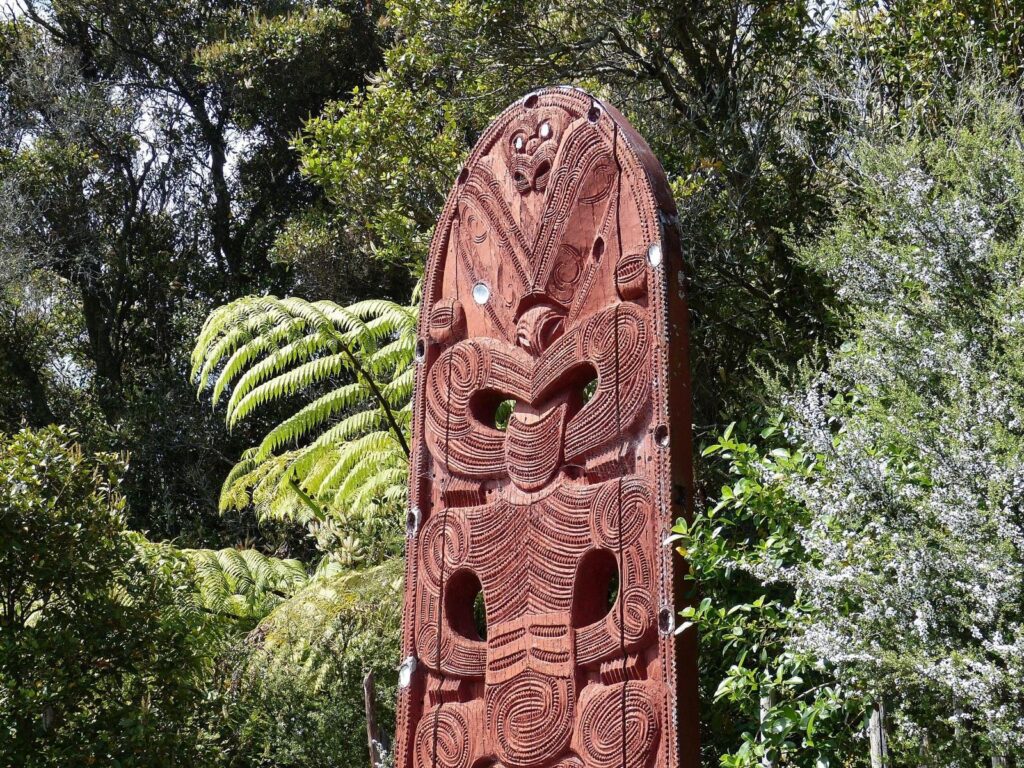
Māori culture
Say hello with
"Kia ora".
Māori are the first people to settle New Zealand. Te reo Māori is used alongside English in everyday life, so you’ll hear it often in place names, signs and greetings on air.
- Kia ora
- Hello · thank you. The Māori greeting you’ll hear most.
- Aotearoa
- The Māori name for New Zealand, often translated as ‘land of the long white cloud’.
- Hongi
- A traditional greeting pressing nose and forehead together. You may see it at formal welcomes.
- Marae
- A Māori community meeting place. Enter only when invited, and follow the guidance given.
How to live like a local.
No need to tip
Restaurants and cafés don’t expect tips. Prices already include tax (GST).
Shops close early
In small towns shops close around 5 pm and kitchens close early too. Plan dinner ahead.
Order a flat white
Café culture is strong. The flat white — less milk and stronger than a latte — is the standard order.
Just say "Cheers"
Used all the time to say thanks. Thanking the driver as you get off the bus is a common sight.
Leave nature as it is
Don’t feed wildlife, stick to marked tracks, and take your rubbish with you.
Bare feet are fine
Don’t be surprised to see people barefoot in the supermarket or on the street. That’s how relaxed it is.
Pre-departure checklist
Rules can change. Check the official sites again before you go — we’ll guide you through the applications.
NZeTA travel authority
For short tourist visits, Korean passport holders apply for an NZeTA and the visitor levy (IVL) before departure instead of a visa.
Always declare food
Declare fruit, meat, kimchi and other food on your arrival card. Not declaring means an instant NZ$400 fine.
Bring an adapter
230 V, with angled Type I sockets. Korean plugs won’t fit as they are.
Traffic keeps left
Cars drive on the left. Look right first when crossing the road.
Cards are enough
Cards are accepted almost everywhere. Just bring a little cash.
Watch the UV
UV is strong even on cloudy days. Bring sunscreen, sunglasses and a hat.
Official information: Immigration New Zealand (NZeTA) · Ministry for Primary Industries (biosecurity declaration) · Tourism New Zealand