
Before You Go
From packing
to arrival declaration.
What to wear each season, what to bring, and how to clear the airport smoothly — all on one page. We’ll go over it again in the group chat before departure.
Seasons and clothing
Seasons are the opposite of Korea's.
The weather can change several times in a day. Whatever the season, the answer is layers. The South Island is noticeably cooler than the North in the same season.
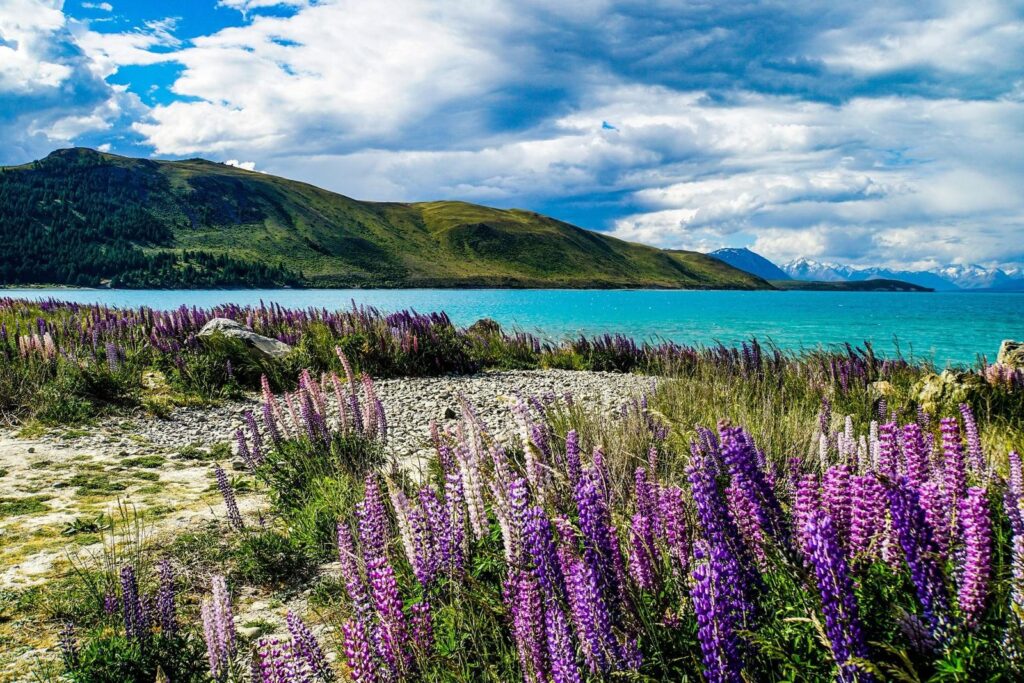
Summer · Dec–Feb
Hot days, cool nights
T-shirts, shorts and swimwear, plus one long-sleeved top and a windbreaker. The UV is very strong.
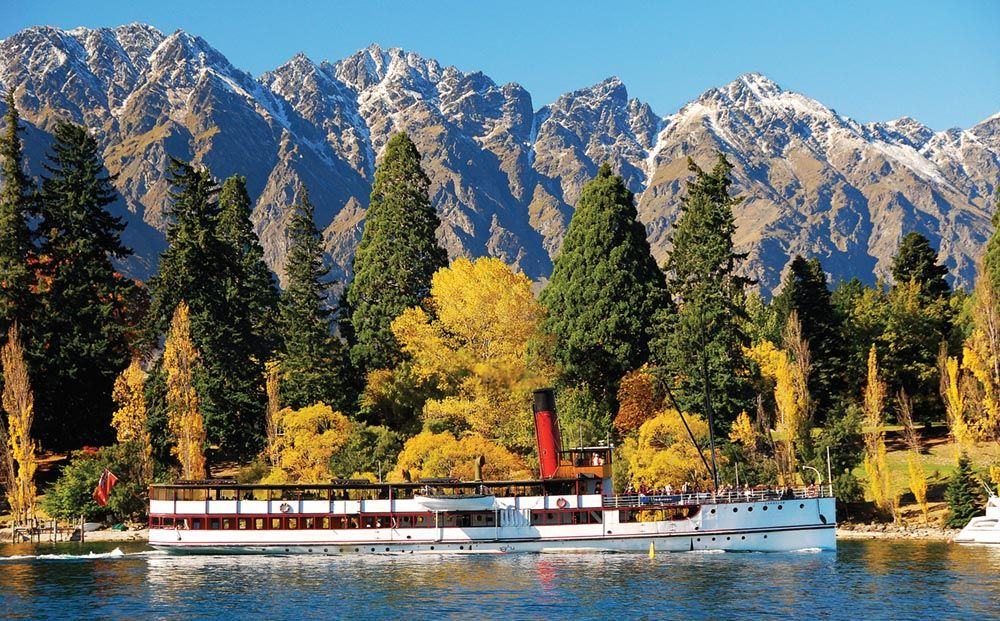
Autumn · Mar–May
Clear, settled weather
Long sleeves and a light jacket. South Island mornings and evenings are chilly.
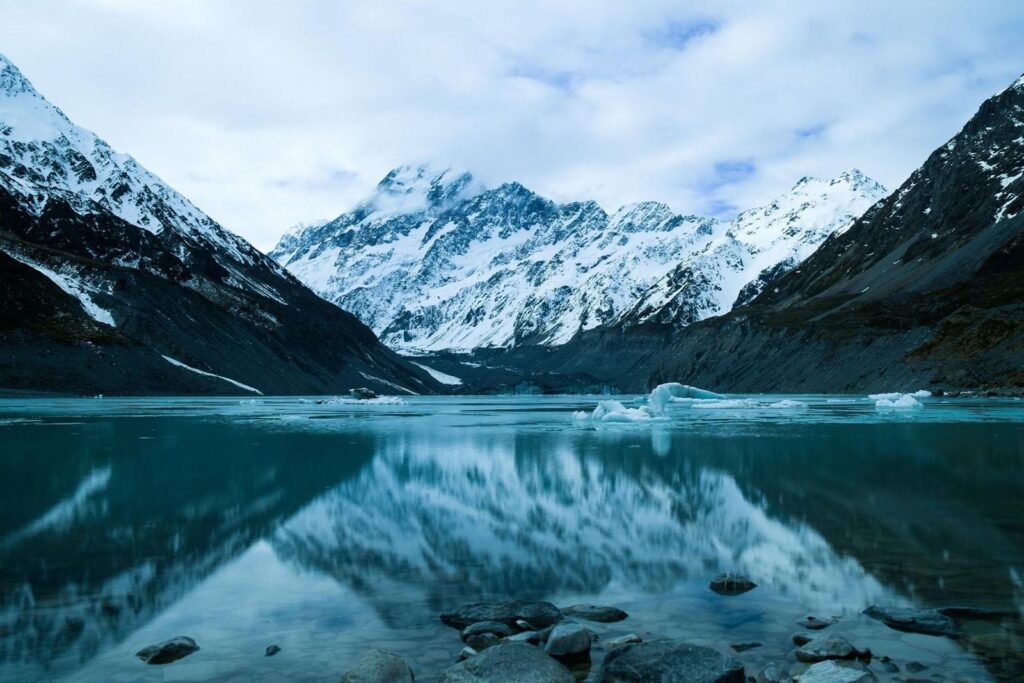
Winter · Jun–Aug
Snow in the South, rain in the North
Down jacket, gloves, hat. Some places have weak indoor heating, so bring warm sleepwear.
Daytime temperatures by course region (typical)
| Region | Spring Sep–Nov | Summer Dec–Feb | Autumn Mar–May | Winter Jun–Aug |
|---|---|---|---|---|
| Auckland · Coromandel | 17–20°C | 23–25°C | 18–22°C | 14–16°C |
| Rotorua | 15–19°C | 22–24°C | 15–21°C | 11–13°C |
| Queenstown · Te Anau | 12–18°C | 20–23°C | 11–19°C | 7–9°C |
| Milford Sound | 12–16°C · often rainy | 17–19°C · often rainy | 12–17°C · often rainy | 8–10°C · road may close |
| Sydney (Australia & South Island course) | 22–25°C | 25–27°C · humid | 20–25°C | 17–19°C |
Rough range of typical daytime highs. Mornings and evenings can be nearly 10°C cooler. We’ll share the actual forecast in the group chat a week before departure.
Packing checklist
This is all you need.
Tick things off as you pack. Baggage allowances depend on your ticket, so check the limits we send after ticketing.
Photo needed
Overhead shot of laid-out luggage — layers, windbreaker, adapter, sunscreen
Photo needed
A Korean plug and a Type I adapter side by side
Documents
Clothes and shoes
Daily items
Can I bring food?
New Zealand is very strict about food to protect its ecosystem. Even packaged food like instant noodles, seaweed and snacks must be declared ‘Yes’ on your arrival declaration. Once declared and inspected, you can usually keep most of it.
- Best not to bring fresh fruit, vegetables, meat or meat products
- Undeclared items that are found mean an instant NZ$400 fine
- Korean groceries are available at local Korean supermarkets
Arrival declaration
New Zealand Traveller Declaration (NZTD)
An online declaration that replaces the old paper arrival card. It’s free and can be completed from 24 hours before departure. If phones are hard for you, you can pick up a paper form on the plane or at the airport.
Traveller declaration · goods
Are you bringing any food?
Including packaged food like instant noodles, seaweed and snacks
Yes
No
Do you have shoes with soil on them or camping gear?
Yes
No
Next
The goods declaration screen matters most.
If you have any food at all, choose ‘Yes’. Declared items are usually allowed after inspection; undeclared items that are found mean an instant NZ$400 fine. If the English questions are tricky, your guide will fill it in with you in the group chat the day before departure.
Photo needed
Real NZTD screenshot — please capture the goods declaration screen while filling it in yourself
If you use the paper form
Korean guide to the arrival card
A Korean-language guide to help you understand the questions. The actual form is filled in English, in capitals. This is the 2015 version, so it may differ slightly from the current form.
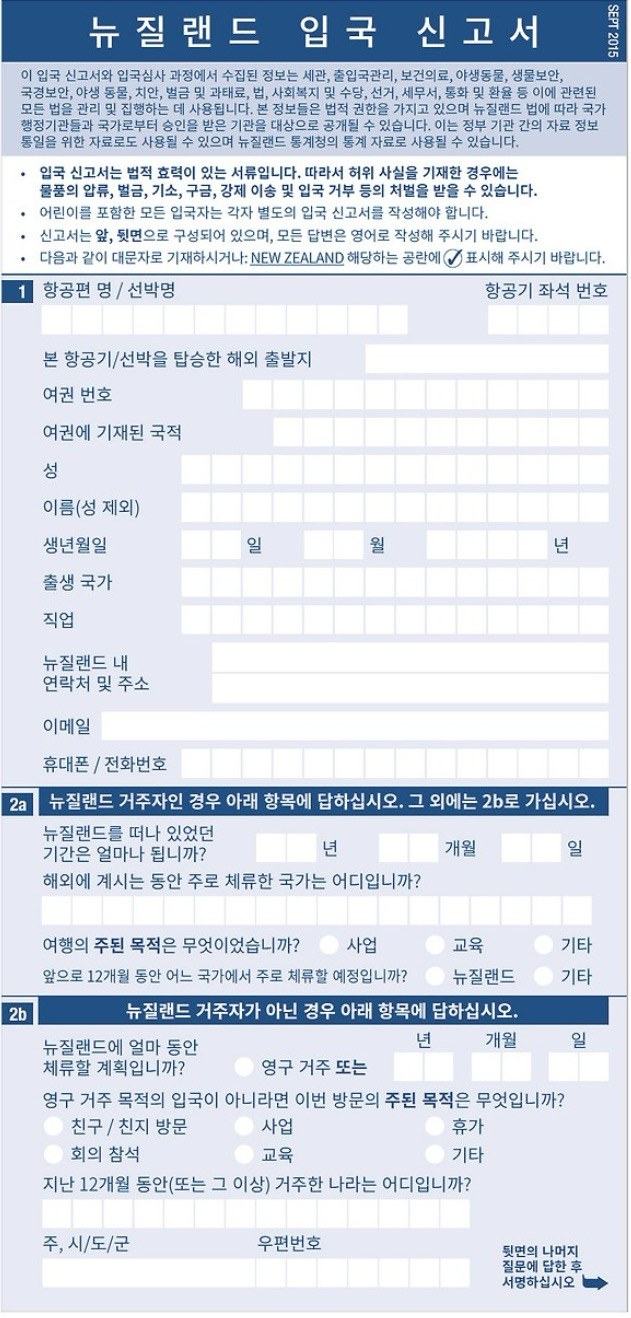
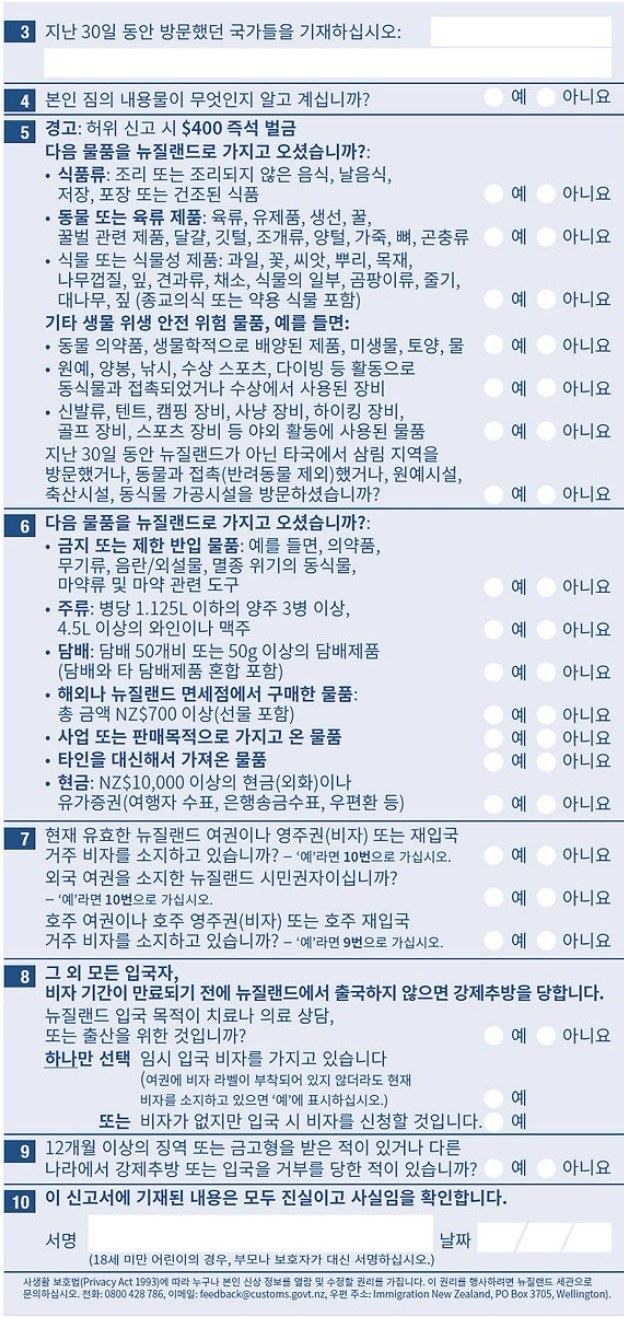
- Q1 · Basic details
Flight number, passport number and name exactly as in your passport. For ‘contact details and address in New Zealand’, write your first accommodation’s address — we’ll share it in the group chat. - Q2b · Purpose of visit
You’re not a NZ resident, so skip 2a and answer 2b. Purpose: ‘holiday’; country of residence in the last 12 months: South Korea. - Q5 · Goods declaration (most important)
If you have any food, tick ‘Yes’ for food. If you have muddy sneakers or hiking boots, tick ‘Yes’ for footwear too. False declarations mean an instant NZ$400 fine. - Q6 · Restricted items
Only ‘Yes’ for duty-free goods over NZ$700 or cash over NZ$10,000. For most people it’s ‘No’. - Q8 · 10 · Visa and signature
Korean passport holders on holiday tick ‘I will apply for a visa on arrival’ at Q8. Sign and date at the end.
Step 1 · the day before
Open the official site or app
Fill it in on the official ‘New Zealand Traveller Declaration’ site or app. Don’t use paid agency sites.
Step 2
Enter passport and trip details
Enter your flight number and first accommodation address. We’ll share the address in the group chat in advance.
Step 3
Goods declaration — answer ‘Yes’ honestly
Choose ‘Yes’ if you have food, items that touched soil like hiking boots or camping gear, or medicines. If unsure, ‘Yes’ is the safe answer.
Step 4 · arrival
Passport control → biosecurity lane
If you declared anything, your bags are checked in the biosecurity lane. Your guide will be waiting at the exit.
Photo needed
Photo of the biosecurity lane sign (items to declare) at Auckland Airport
For the Australia & NZ South Island course
You fill in a separate Australian arrival card when entering Sydney. Australia is moving from paper to digital cards from 2026, so we’ll brief you on the method that applies before you leave.
Official information: New Zealand Traveller Declaration · Ministry for Primary Industries (biosecurity)